 Trusted by healthcare professionals
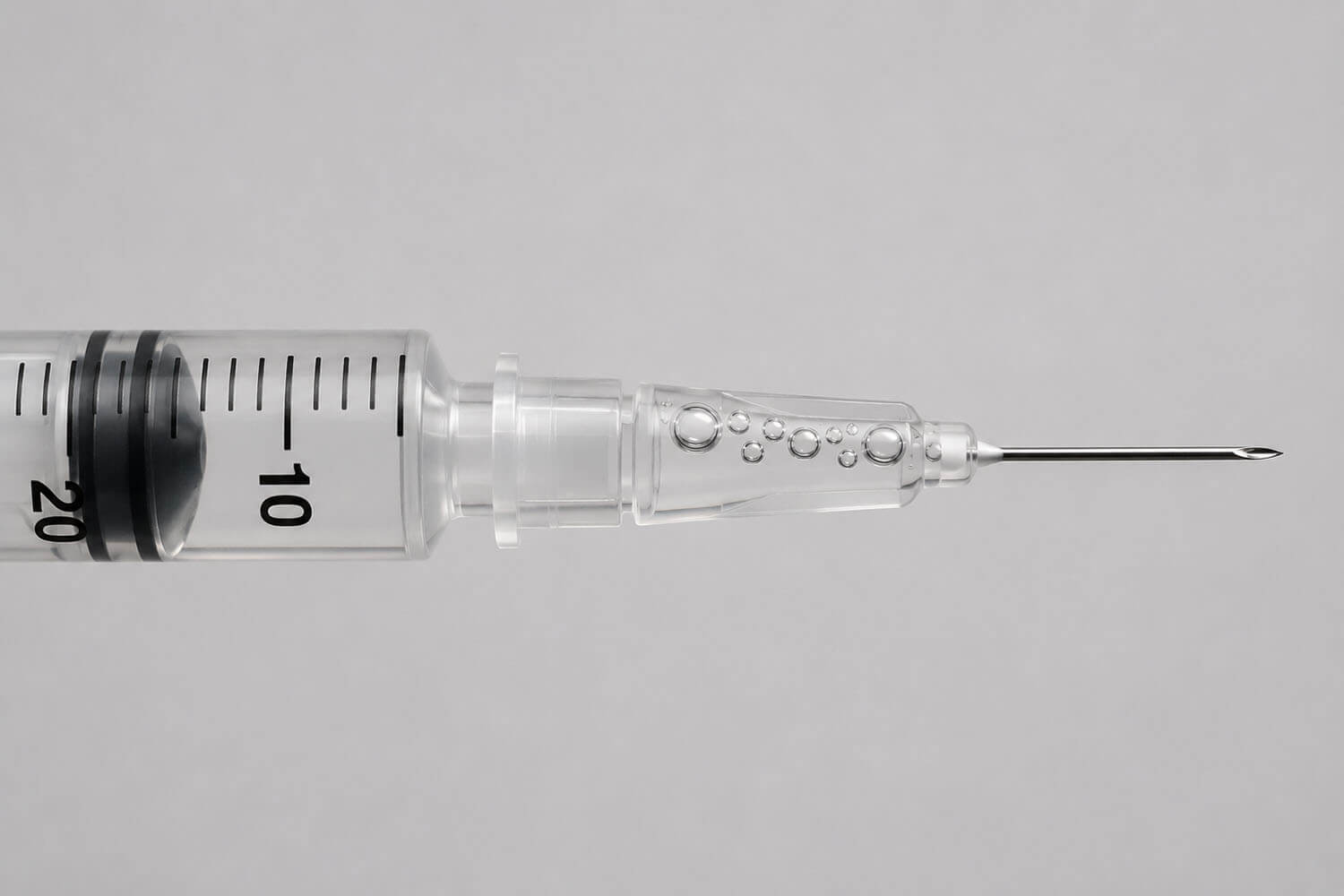
Air bubbles in a syringe
If you use a syringe to administer medication, you may occasionally notice one or more small air bubbles inside the barrel. This is especially common when drawing medication from a vial. For many people, seeing an air bubble can be concerning, but in most cases there is no reason to worry. Understanding why air bubbles occur and when they matter can help you inject your medication with confidence.
Small air bubbles in a syringe are common and are usually not harmful when administering subcutaneous medications such as insulin or GLP-1 treatments. While tiny bubbles generally do not affect your health, removing larger bubbles can help ensure the most accurate dose. With a calm, careful technique, air bubbles are easy to manage and should not prevent you from administering your medication safely.
Why do air bubbles form?
Air bubbles usually enter the syringe while medication is being drawn from a vial. This can happen if the needle is not fully submerged in the liquid, if the plunger is pulled back too quickly, or if air is accidentally drawn into the syringe along with the medication. Small bubbles are common and do not necessarily indicate that anything has gone wrong. With proper technique, they can often be removed before the injection if desired.
Dangerous?
For subcutaneous injections, such as insulin or GLP-1 medications, small air bubbles are generally not harmful. A tiny amount of air injected into the fatty tissue beneath the skin does not pose a health risk and is unlikely to affect your treatment. This differs from intravenous injections, where air entering a vein can be dangerous. Fortunately, people who self-administer medications such as insulin or GLP-1 therapies are injecting into subcutaneous tissue, not directly into a blood vessel.
If you notice one or two very small bubbles, there is usually no cause for concern.
Can air bubbles affect your dose?
Although small bubbles are not dangerous, they can slightly reduce the amount of medication in the syringe. A large air bubble occupies space that would otherwise contain medication, meaning the delivered dose may be marginally lower than intended. For most routine injections, a tiny bubble has little or no practical effect. However, many people prefer to remove visible air bubbles to achieve the most accurate dose possible.
How to remove air bubbles
If you would like to remove air bubbles before injecting, the process is straightforward. Hold the syringe with the needle pointing upwards and gently tap the side of the barrel with your finger. This encourages the bubbles to rise to the top. Slowly press the plunger until the air is expelled through the needle. A small drop of medication may appear at the needle tip, indicating that the air has been removed.
If necessary, draw a little more medication to return to the correct dose before administering the injection.
Tips for accurate injections
Drawing medication slowly and keeping the needle tip below the surface of the liquid while filling the syringe can help reduce the formation of air bubbles. Taking your time and checking the syringe before injecting also improves dosing accuracy. Always use a new sterile syringe and needle for each injection and follow the instructions provided by your healthcare professional or medication manufacturer.