 Trusted by healthcare professionals
Common injection sites: where should you inject?
Choosing the correct injection site is an important part of safe and effective medication administration. Different medications are designed to be injected into specific types of tissue, and using the recommended injection site helps ensure the medication is absorbed as intended. For many people who self-administer medication, injection sites become part of a daily or weekly routine. Understanding where to inject and how to rotate injection sites can also help reduce skin irritation and improve comfort.
The abdomen, thigh, upper arm, and hip are common locations for subcutaneous injections, while intramuscular injections are typically administered into larger muscles such as the upper arm or thigh.
Common sites for subcutaneous injections
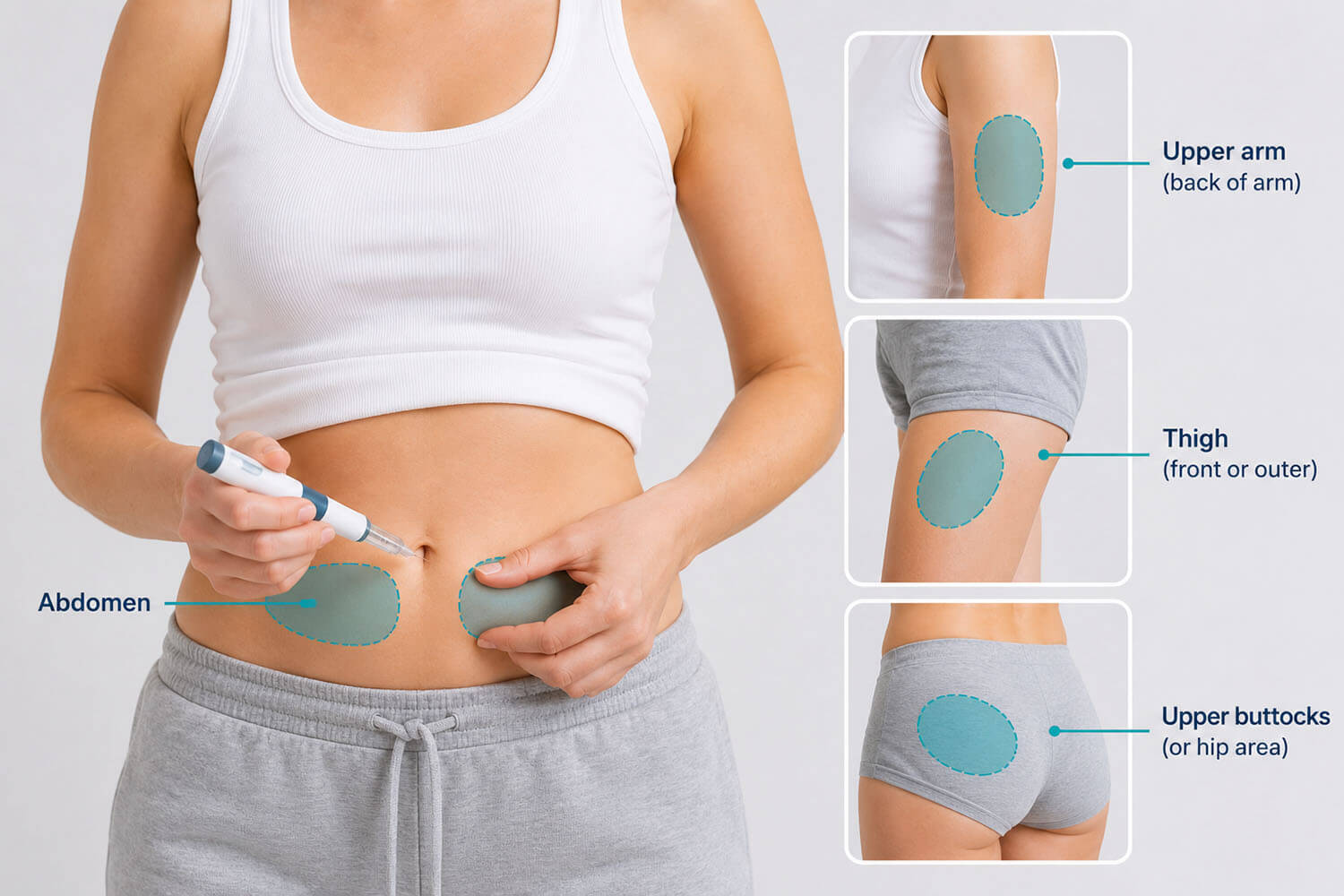
Subcutaneous injections deliver medication into the fatty tissue just beneath the skin. This is the most common injection method for medications such as insulin and GLP-1 receptor agonists. The recommended injection sites are:
- Abdomen – Usually provides consistent absorption and is one of the most commonly used sites
- Front or outer thigh – A convenient option for self-injection
- Back of the upper arm – Often used when another person is administering the injection, although some people can use this site themselves
- Upper buttocks or hip area – Suitable for certain medications when adequate fatty tissue is present
Always follow the instructions provided with your medication, as some manufacturers recommend specific injection sites.
Common sites for intramuscular injections
Intramuscular injections are administered into muscle tissue and are generally used for vaccines, vitamin injections, hormone therapies, and certain prescription medications. Depending on the medication and the patient, common injection sites include:
- The upper arm (deltoid muscle)
- The outer thigh (vastus lateralis muscle)
- The hip (ventrogluteal site)
The appropriate injection site depends on the medication, the volume being injected, and whether the injection is being administered by a healthcare professional or by the patient after training.
Why Is site rotation important?
Repeated injections in exactly the same location can lead to skin irritation and changes in the underlying tissue. In people using insulin, frequent injections into the same area may cause lipohypertrophy, where fatty tissue becomes thickened. This can affect how medication is absorbed.
To reduce this risk, it is recommended to rotate injection sites. Rather than injecting into exactly the same spot each time, move to a different location within the same injection area or alternate between recommended sites according to your healthcare provider’s advice.
Tips for safe injections
Before administering an injection, inspect the skin. Avoid areas that are bruised, swollen, scarred, infected, or otherwise irritated. Clean the site if recommended for your medication, and always use a new sterile needle for every injection.
If you experience persistent pain, swelling, or signs of infection after an injection, contact your healthcare provider.