 Trusted by healthcare professionals
Subcutaneous vs Intramuscular Injections
Many injectable medications are administered either subcutaneously (SC) or intramuscularly (IM). While both methods involve using a needle to deliver medication into the body, they target different layers of tissue and are used for different types of medication. Understanding the difference helps ensure that injections are given safely and effectively.
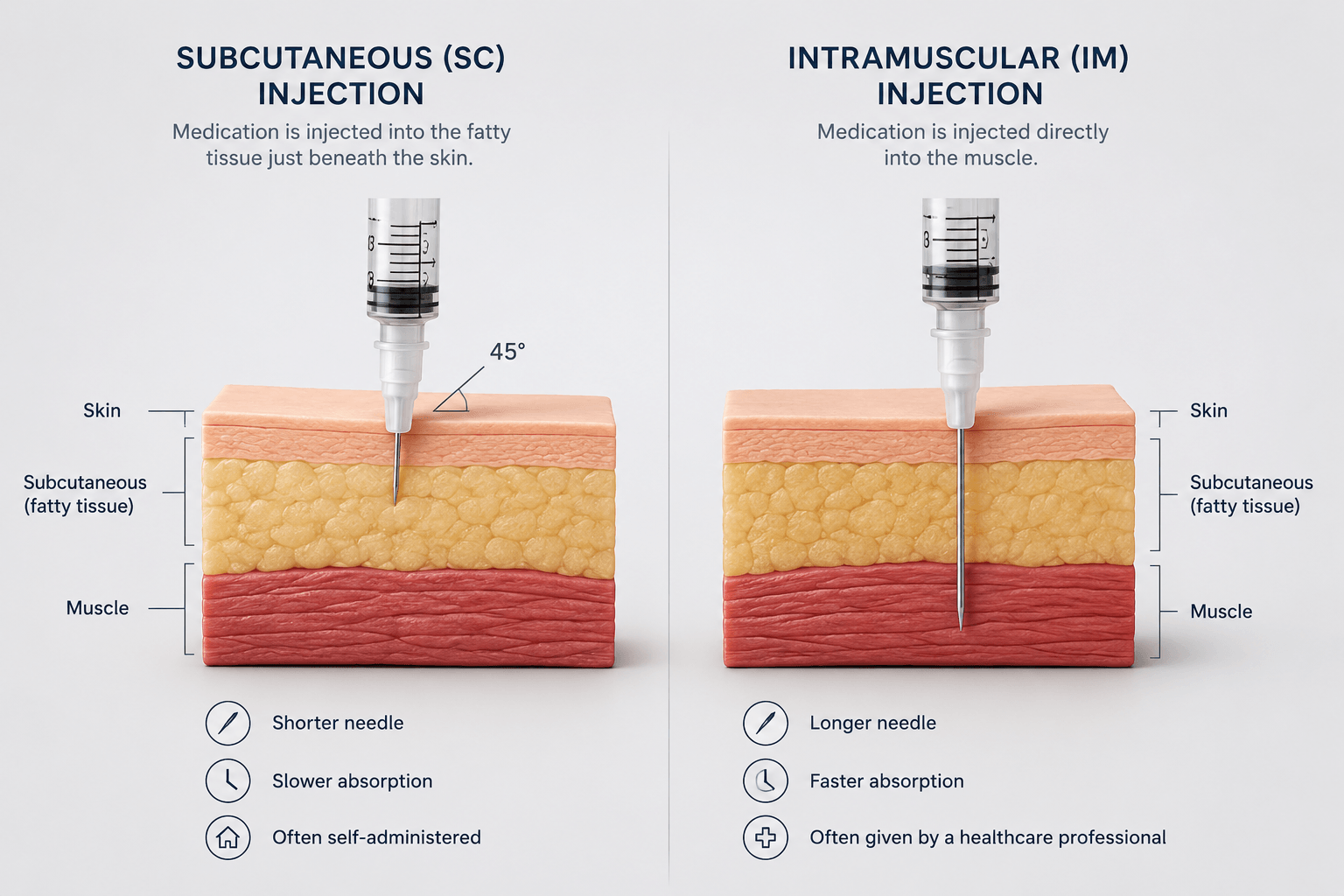
Subcutaneous injections are given into the fatty tissue beneath the skin and are commonly used for medications such as insulin and GLP-1 treatments. Intramuscular injections are administered into muscle tissue and are often used for vaccines, vitamin injections, and certain prescription medications.
What is a subcutaneous injection?
A subcutaneous injection is administered into the layer of fatty tissue just beneath the skin. This tissue contains fewer blood vessels than muscle, allowing medication to be absorbed gradually into the bloodstream. Many medications designed for self-administration are given subcutaneously because the technique is relatively simple and can often be performed at home after proper instruction. Common examples include:
- Insulin
- GLP-1 medications such as semaglutide and tirzepatide
- Some blood-thinning medications
- Certain biological medicines
Typical injection sites include the abdomen, thigh, or upper arm. Short, fine needles are commonly used to improve comfort while ensuring the medication reaches the fatty tissue.
What is an intramuscular injection?
An intramuscular injection delivers medication directly into a muscle. Muscle tissue has a much richer blood supply than fatty tissue, allowing many medications to be absorbed more quickly. Intramuscular injections are often performed by healthcare professionals, although some patients receive training to administer specific medications at home. Common examples include:
- Many vaccines
- Vitamin B12 injections
- Certain antibiotics
- Hormone therapies
The upper arm, thigh, and buttock are among the most common injection sites, depending on the medication and the volume being injected.
Why does the injection method matter?
Medications are specifically formulated to be administered by a particular route. Injecting a medication into the wrong tissue can affect how quickly it is absorbed and, in some cases, reduce its effectiveness or increase the risk of side effects. Needle length is also important. Subcutaneous injections usually require shorter needles because they only need to reach the fatty layer beneath the skin. Intramuscular injections generally require longer needles to reach the muscle safely. For this reason, always use the needle type and injection technique recommended by your healthcare provider or described in the medication’s instructions for use.
Which method is right for you?
The correct injection method depends entirely on the medication you have been prescribed. You should never choose between subcutaneous and intramuscular administration yourself unless you have been instructed to do so by a qualified healthcare professional. If you are unsure which injection technique applies to your medication, consult your doctor, nurse, or pharmacist before administering the injection.